Buying guides
Before choosing a breakfast cereal: a label checklist
Keep the product version, serving weight and preparation state in view before comparing rows.
Read the details ↗Foods
By SteadyScale editorial · Updated October 16, 2026
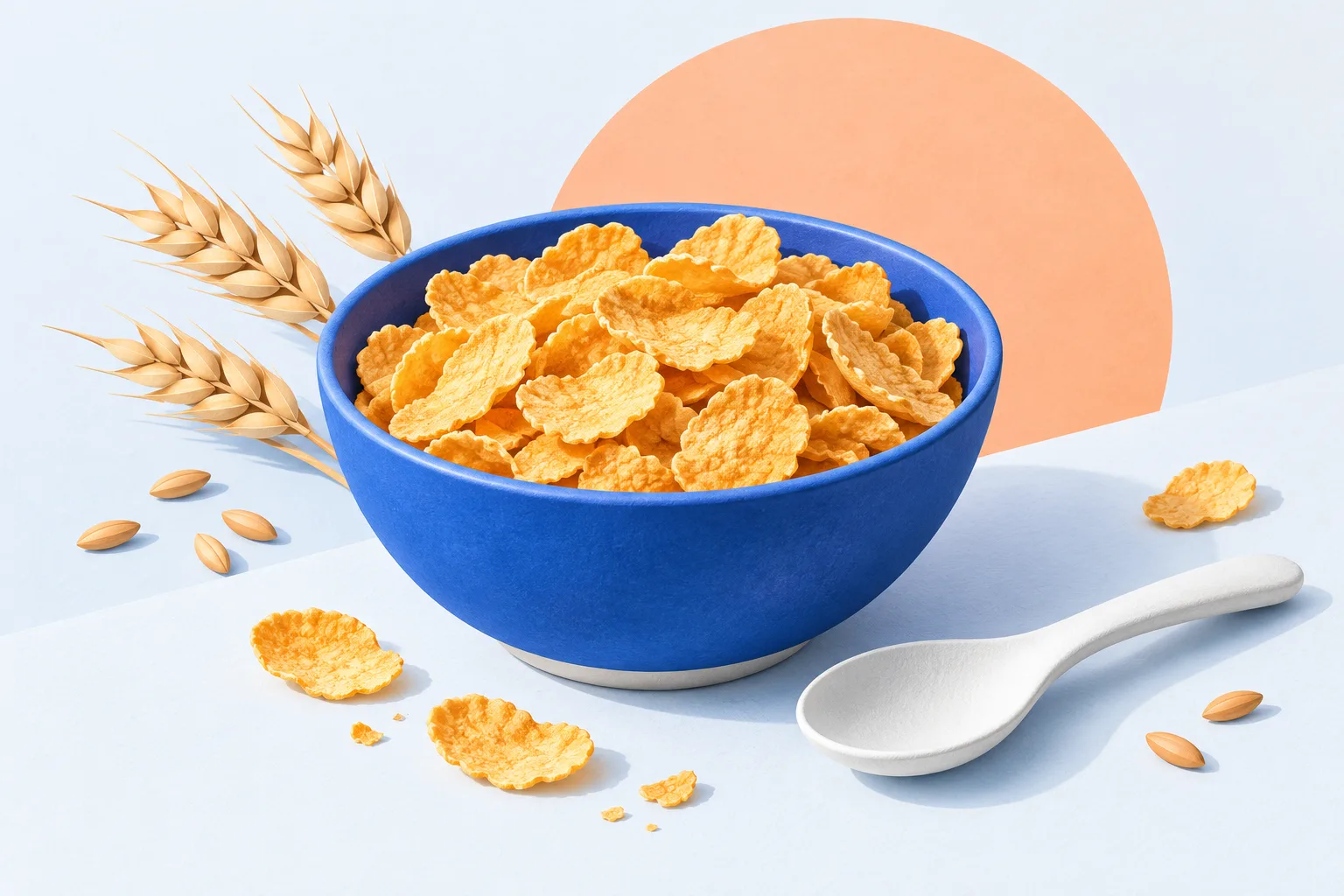
Chex · US market
Web panel: about 6 servings Original
Based on published labels and product information. Not taste-tested.
| Label field | Per serving | Derived estimate |
|---|---|---|
| Energy (kcal) | 210 | 355.9 kcal per 100 g · derived |
| Total fat (g) | 1 | 1.7 g per 100 g · derived |
| Saturated fat (g) | 0 | 0 g per 100 g · derived |
| Carbohydrate (g) | 51 | 86.4 g per 100 g · derived |
| Dietary fiber (g) | 8 | 13.6 g per 100 g · derived |
| Total sugars (g) | 6 | 10.2 g per 100 g · derived |
| Added sugars (g) | 6 | 10.2 g per 100 g · derived |
| Protein (g) | 6 | 10.2 g per 100 g · derived |
| Sodium (mg) | 340 | 576.3 mg per 100 g · derived |
“Not reported” is not zero. Qualified values retain their meaning; missing serving measures are not inferred.
Ingredient overview, not a full transcription: whole-grain wheat, sugar, molasses, salt, baking soda and vitamin E; added vitamins and minerals. Consult the manufacturer list.
Manufacturer statement: contains wheat ingredients. The product page explicitly says Wheat Chex is not gluten-free.
We do not infer allergen-free or gluten-free certifications from an ingredient list.
The checked serving is 59 g. Keep that larger gram amount in mind when reading per-serving differences against the other two cereals in our comparison.
Do not rely on a search title or assumptions about the wider brand. Open the product page and the current package for the exact version you have.
The table records label facts. It does not establish which cereal is best for your health or promise a weight outcome.
The first column follows 1 cup (59g). The derived column uses an equal 100 g weight only where the source supports it. Neither amount is a prescribed portion. Read the calculation guide.
No. Added sugars are included within total sugars. Read both rows without adding them together, and do not turn either number into an overall health rating. Understand the two sugar fields.
Check the exact flavor, market, package and preparation state. Follow the current physical package for ingredients and allergens. You can report a source mismatch without sending personal health information.